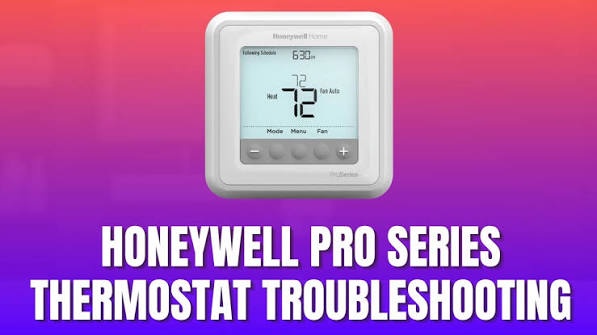
Home climate control has become more advanced as homeowners look for better comfort, energy management, and convenient ways to operate heating and cooling equipment. Modern thermostats are no longer limited to displaying indoor temperature and turning HVAC equipment on or off. Connected controls can provide scheduling, remote access, energy monitoring, smart-home integration, and adaptive temperature management.
In 2026, these developments are becoming increasingly important as households focus on energy efficiency and personalized comfort. A honeywell home thermostat can provide homeowners with practical temperature-management capabilities while serving as an important interface between occupants and their HVAC system.
Traditional thermostats required homeowners to make most temperature adjustments manually. Programmable models introduced scheduled temperature changes, allowing users to establish different settings for mornings, afternoons, evenings, and overnight periods.
Today's smart controls can take automation considerably further. Depending on the model and HVAC system, connected thermostats may use occupancy information, schedules, remote commands, and environmental data to optimize temperature management.
This evolution reflects a broader shift toward intelligent home technology. Instead of simply reacting to temperature changes, modern systems can use information to make climate control more responsive.
One of the most useful features of connected thermostats is automated scheduling. Homeowners can establish temperature preferences based on their daily routines.
For example, a household can use different settings while occupants are sleeping, working, away from home, or relaxing in the evening.
Advanced systems can also incorporate adaptive scheduling. When compatible technology learns household patterns, it may help reduce the amount of manual programming required.
Smart scheduling is particularly useful for households with predictable routines because it can prevent unnecessary heating or cooling during periods when the property is unoccupied.
Smartphone connectivity has transformed how homeowners interact with HVAC systems. Compatible thermostats can allow users to monitor indoor temperatures and change settings remotely.
This feature can be useful when plans change unexpectedly. A homeowner who leaves work earlier than expected may be able to adjust the home's temperature before arriving.
Remote monitoring can also provide greater visibility into HVAC operation while occupants are away.
However, homeowners should remember that remote connectivity depends on compatible equipment, network availability, and appropriate configuration.
Artificial intelligence is one of the most significant technology trends affecting residential climate management in 2026.
AI-assisted systems can analyze information such as temperature patterns, occupancy, weather conditions, and historical usage.
Instead of relying entirely on fixed schedules, intelligent controls can potentially adapt to changing household conditions.
For example, a system may recognize that a property is regularly unoccupied during certain hours and adjust operation accordingly.
AI does not eliminate the need for homeowner oversight. Temperature preferences, comfort requirements, and equipment limitations should always remain important considerations.
Reducing unnecessary energy consumption continues to be a major objective for homeowners. Smart thermostat technology can support efficiency by helping households manage temperature settings more precisely.
However, thermostat controls represent only one part of an efficient HVAC system.
Equipment age, insulation, ductwork, airflow, filter condition, system sizing, and maintenance can all influence energy consumption.
A highly efficient thermostat cannot compensate for poorly maintained HVAC equipment. For the best results, smart controls should be combined with regular professional maintenance and appropriate system operation.
Today's thermostats can work with increasingly sophisticated heating and cooling systems. Variable-speed air conditioners, heat pumps, multi-stage furnaces, zoning equipment, and other technologies may require compatible controls.
Proper compatibility is therefore essential when upgrading a thermostat.
Homeowners should identify the existing HVAC system and review manufacturer requirements before purchasing a replacement control.
Professional installation can be particularly useful when equipment includes multiple stages, auxiliary heating, heat-pump operation, zoning, or specialized communication protocols.
The definition of indoor comfort is also expanding. Homeowners are increasingly interested in humidity, filtration, ventilation, and overall indoor air quality.
Some smart climate-control systems can work alongside humidifiers, dehumidifiers, ventilation equipment, and advanced filtration solutions.
Maintaining appropriate humidity can improve perceived comfort, while suitable filtration can help manage airborne particles.
Because every HVAC system has different airflow requirements, filtration and air-quality equipment should be selected carefully to maintain proper system performance.
Another emerging trend is predictive HVAC monitoring. Connected controls and equipment can collect information about operating cycles, temperatures, and system behavior.
Over time, unusual patterns may indicate that an HVAC system is operating differently from normal.
For instance, significantly longer cooling cycles could indicate airflow restrictions, declining performance, or changing environmental conditions.
Predictive monitoring does not replace professional diagnosis, but it can provide useful information that encourages earlier investigation.
Modern thermostats commonly provide temporary temperature adjustments and schedule overrides. These functions allow homeowners to change indoor conditions without permanently modifying their programmed schedule.
Understanding the difference between temporary adjustments and permanent changes is important.
A homeowner who changes a temperature manually may later wonder why the thermostat is not following its normal schedule. Checking for an active hold or override can often explain the unexpected behavior.
Learning the controls available on a specific thermostat model can prevent unnecessary troubleshooting and accidental schedule changes.
Even advanced thermostat technology cannot replace HVAC maintenance.
Homeowners should follow recommended filter-maintenance schedules and keep outdoor equipment free from excessive leaves, vegetation, and debris.
Professional HVAC inspections can evaluate electrical components, airflow, controls, coils, refrigerant-related performance, and other system components.
Maintaining the equipment also helps ensure that thermostat commands are translated into effective heating and cooling.
When considering a honeywell home thermostat, homeowners should evaluate compatibility, scheduling features, connectivity, remote access, smart-home integration, energy reporting, and ease of operation.
The most sophisticated thermostat is not necessarily the best choice for every property. Compatibility with the existing HVAC system should come first.
A professional HVAC technician can help homeowners determine which thermostat and control strategy are appropriate for their equipment.
Residential HVAC controls are becoming increasingly intelligent and connected. Throughout 2026 and beyond, homeowners can expect continued developments in AI-assisted scheduling, occupancy sensing, predictive diagnostics, energy monitoring, and smart-home integration.
These technologies can make heating and cooling more convenient while giving homeowners greater insight into energy consumption and equipment performance.
The most effective approach combines modern controls with properly sized HVAC equipment, professional installation, sensible temperature settings, and regular maintenance. With these elements working together, homeowners can create a more comfortable and efficient indoor environment while making better use of the latest advances in residential climate technology.

This post has been authored and published by one of our premium contributors, who are experts in their fields. They bring high-quality, well-researched content that adds significant value to our platform.










UK Packages Boxes provides helpful packaging guides, shipping advice, storage solutions, and industry insights for businesses and individuals across the UK.
